

Call Us: (617) 545-3367
Log Splitter Guide
Thanks for renting with Toolio — cheers to a day of log splitting!
Your quick path to doing it right: clear steps, smart tips, and fast fixes

Operator Guide
Pro Tips
- Start Safe. Know how to start and stop the splitter. Keep children away from pinch points. Wear safety glasses and gloves.
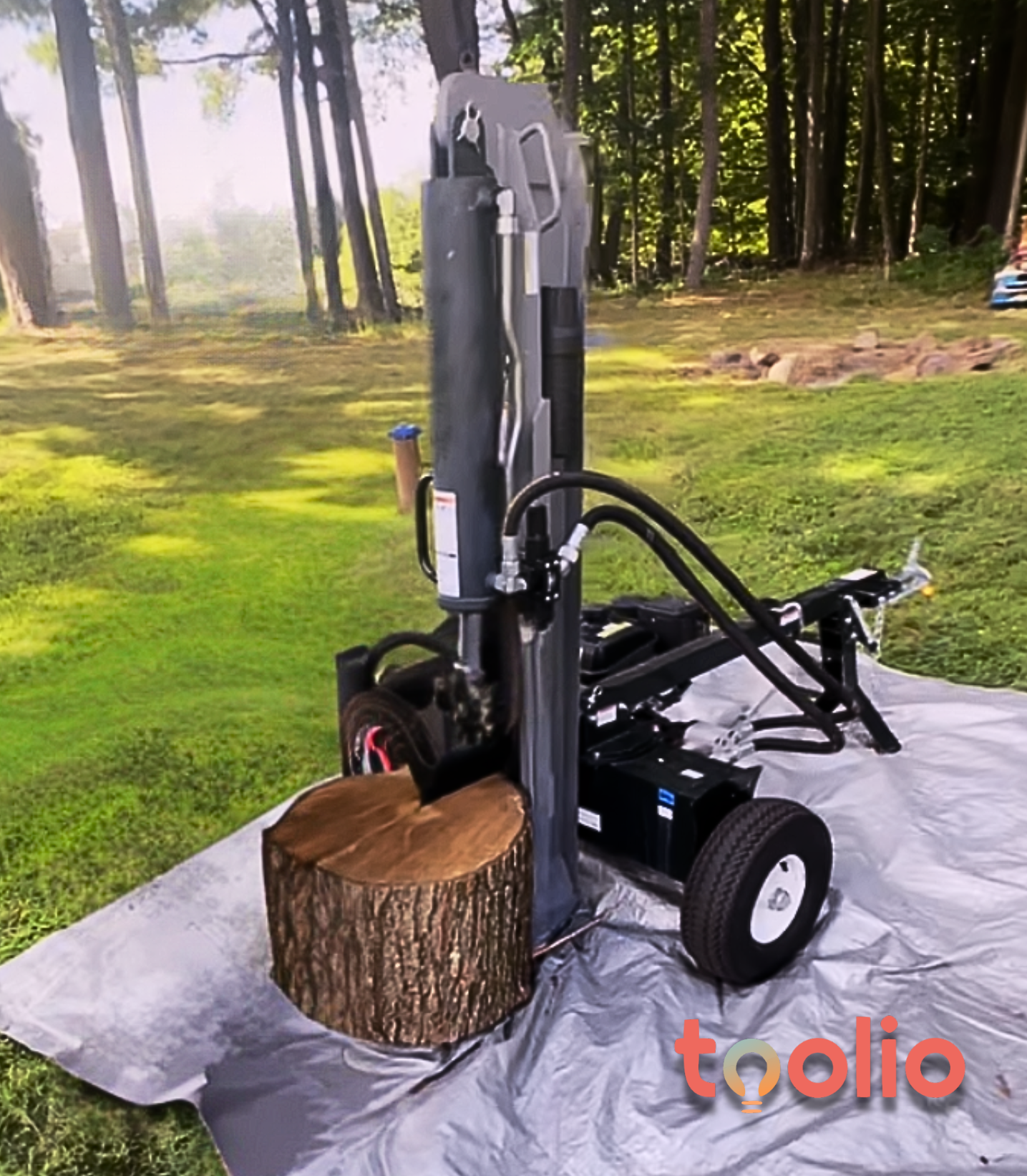
- Tarp it. Lay one under the splitter to catch scraps for kindling and speed up cleanup.
- Keep it moving. Use a team to feed logs non-stop – that’s how you hit 5+ cords/day.
- Go vertical. Flip to vertical mode for heavy rounds you can’t lift.
- Stack as you go. Designate a staging zone so split wood doesn’t pile up in your workplace – keeps things efficient and safe.
Wood Selection
What wood should I burn indoors? How long does seasoning actually take?
We think this article nails it — all credit to the original author.
Troubleshooting
1. Stuck Logs
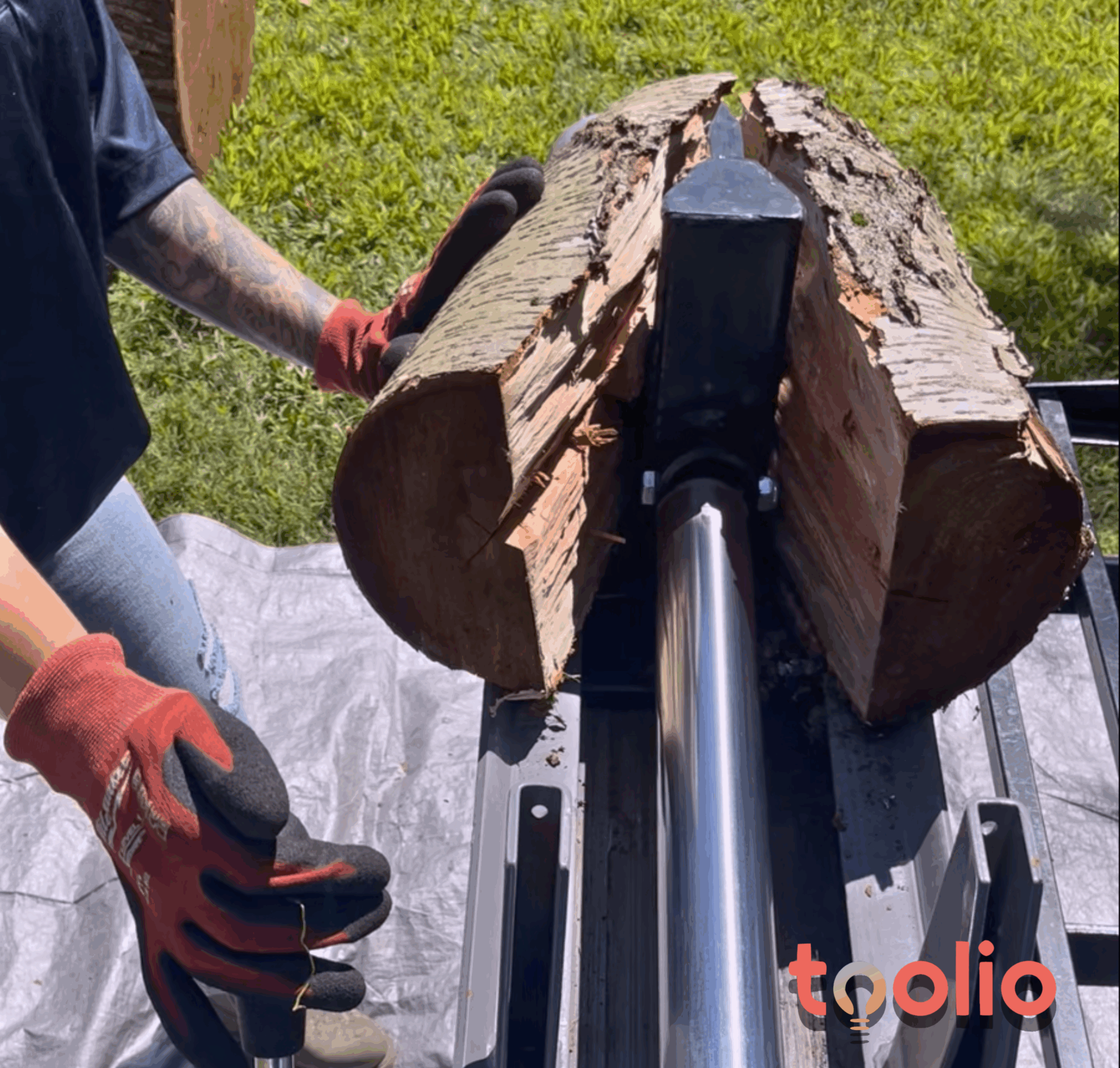
When a log is jammed in the wedge, retract the wedge and use another log in-place to press the first log out. DO NOT push on or hit hydraulics directly.
2. Engine won’t start
A. Check fuel in the tank – if low, add fuel
B. Check fuel lever near engine – must be on
C. Check choke – on a cold day, choke is needed for first start. In summertime and after running, choke will prevent engine start
3. Other Issues
If hydraulics won’t move or for any other concerns – give us a call.
Rental Care
Rentals get normal wear and tear—but negligence that damages our tools will incur a repair or replacement fee. Review our acceptable vs. unacceptable conditions guide so you know exactly what to watch for.
Unacceptable Conditions & How to Prevent Them
| Unacceptable Condition | How to Avoid |
| Hydraulic ram bent or leaking | Never place objects other than wood in splitter. Clear rocks and other debris if added. Split with wood grain, not against. |
| Slashed tires | Avoid heavy equipment and vehicles near splitter |
| Major dents on frame, ram, or engine | Plan route if moved in yard to avoid obstacles and tipping over Do not transport on-road. Avoid heavy equipment and vehicles near splitter |
| Operating without hydraulic fluid or engine oil | Listen for grinding noises. Do not operate if leaking fluid. |
| Overheated engine | Monitor for smoke from engine and clear debris near engine if built up |
Acceptable Wear and Tear
- Light paint scratches
- Small scuffs on beam or frame
- Light surface rust
- Discoloration or fading
- Grease or oil spots around fittings
- Wedge dulling